Recently, my family took a trip out west and we had the opportunity to visit the Grand Canyon for the first time in all of our lives! We have seen pictures….we have seen puzzles…..we have heard stories…..we have flown over parts of it…..but we had never been ourselves.
We arrived at the West Rim and followed our tour guide’s advice to spend the majority of our time visiting Eagle Point and exploring Guano Point. (For a little flashback humor, those of you who grew up in the “Ace Ventura” movie days May recall that “Guano” is the fancy name of BAT POOP.) We took our first pictures at Eagle’s Point and just soaked in the handiwork of our Creator. The two fellas in our family are Eagle Scouts, so it was super cool to get a picture of them with the Eagle formation in the canyon.

Once we finished up there, we went over to Guano Point to explore a little bit. Our tour guide recommended climbing the “ant hill” for some great views of the canyon from an elevated perch. From the ground, it didn’t look so bad. However, for the one in the family who has an intense fear of falling…..it was something else.
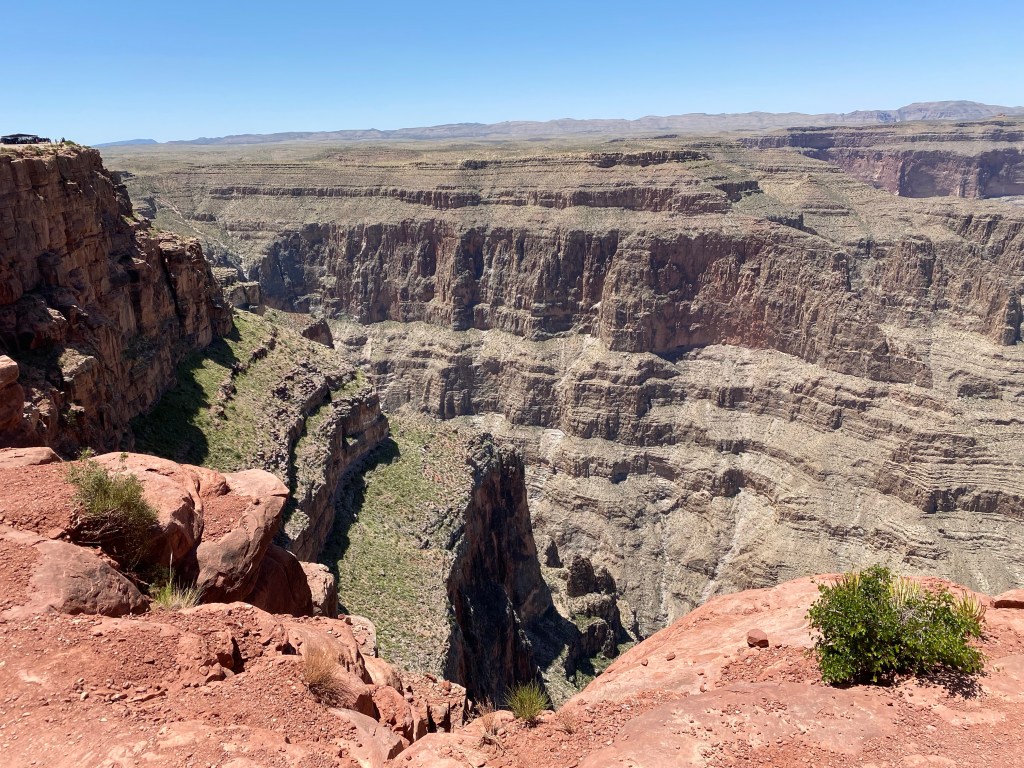
This was the place.
As I made my way around the back side of “the ant hill,” my husband told me to come closer to where he was for a better picture of the canyon below. As I moved towards him, the path on which I was moving became very narrow….and, as you can see in the photo above, the edge of the “ant hill” came pretty close to where my feet were.
Yes, it’s beautiful.
However, when you’re terrified, all you can think is “how in the world am I going to get off of here….alive?!?” Yes, my mind went there. My foot slipped just a tad (seriously was not much in hindsight) and it sent me into a full blown anxiety attack. I could not move off of the rock I was pressed against. Heart rate was up. Mouth got dry. Sweating was intense. Eyes were leaking and nose was running. For a few moments, I believe I was “scared to death.”
My son came and helped guide me back in the safest and least scary way possible. I was a bit embarrassed that I was so afraid. In the midst of trying to be safe and cry and not hyperventilate, I mumbled under my breath multiple times…..”Lord, please help me.” I started praying 1 Peter 5:7 to remind myself to “cast my anxiety on Him because He cares for me.” That’s all I knew to do.
I don’t have a pretty end to the story that is as clean as “I prayed and all of my fear is gone.” But I did pray. And He did help me. (I’m writing this blog today, so I made it!) It’s easy to feel like a Spiritual peon because I can’t shake that fear. Exposure therapy didn’t make it better. But in the moment, I called on Him in prayer, I quoted His Word, and He helped me THROUGH the fear. It’s not gone. But neither is He.
Maybe you don’t have a fear of falling. Maybe it’s social anxiety, fear of spiders, fear of rejection, fear of failure, fear of being alone, fear of dying, fear of being exposed, fear of _____________. You know what blank applies to you. As a Believer who continues to walk with the Lord, who wants to know Him more and love Him better…..let me assure you that He would love to join you in the middle of your ________________ and be with you THROUGH it. I won’t discount your faith if the fear is still there…..the enemy of our souls is good enough at that. But I do have full confidence in saying that inviting Him in to whatever it is you are facing will give Him the opportunity to help shoulder that burden.
Fear of ______________ is scary.
Invite Him in. He will give you strength THROUGH it.




 Lessons from the Lawn